✅ Edibility Note
EDIBLE when young and fresh: Good edible mushroom with mild flavor when young and tender. Older specimens become tough, bitter, and develop laxative properties - avoid. Best when small and white with no yellowing. Cook thoroughly. The brittle texture and mild flavor are pleasant in young specimens. Generally safe but quality declines rapidly with age. Harvest only fresh, white specimens.
Description
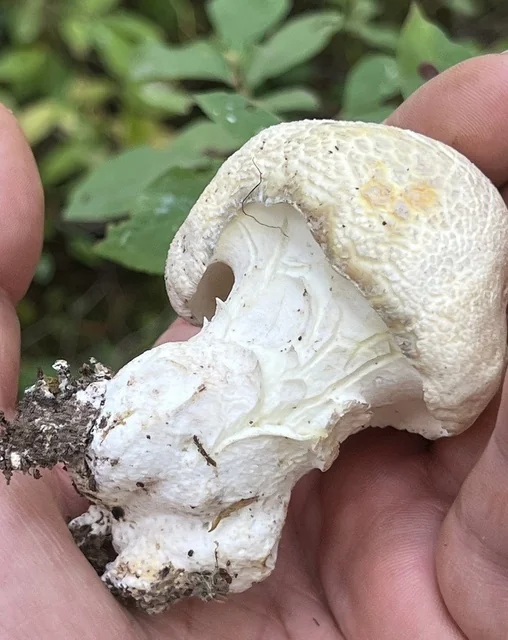
White to cream colored mushroom with irregular depressed caps 2-6 inches wide, often fused together in clusters. Thick, central to off-center stem 1-3 inches tall. White to cream small pores on underside. Firm, brittle flesh. Often grows in fused clusters of multiple caps. Stains yellow with age or when handled. Distinctive shape and color.
Habitat & Distribution
Habitat: Mycorrhizal with conifer trees, particularly spruce, fir, and pine in mountainous regions. Grows on ground in coniferous forests, often in moss. Common in montane and subalpine spruce-fir forests. Prefers acidic soils. Found scattered or in small groups.
Region: Rocky Mountains, Cascade Range, Sierra Nevada, Northern montane forests, Pacific Northwest mountains, Circumboreal in northern regions
Seasonality
Summer through fall in mountains, typically July-October. Peak fruiting in August-September. Fruits after summer rains in high-elevation conifer forests. Most common mid to late summer.
Typical months: Jul-Oct
Common Lookalikes
Always verify identification to avoid these similar species:
- Albatrellus confluens (more orange tones, similar habitat)
- Other Albatrellus species (similar appearance and edibility)
- Scutiger species (similar but different pore structure)
- Young Bondarzewia (much larger, different habitat)
Related Species
Browse all species in the Mushroom Database →
Track Your Sheep Polypore Finds
Pin the patch before you leave it. Coordinates, photos, and field notes stay AES-encrypted on your device — and the offline lookalike guide travels with you into the deep woods.
Download Mushroom TrackerDisclaimer: This guide is for educational purposes only. Never consume a wild mushroom unless you are 100% certain of its identification.