✅ Edibility Note
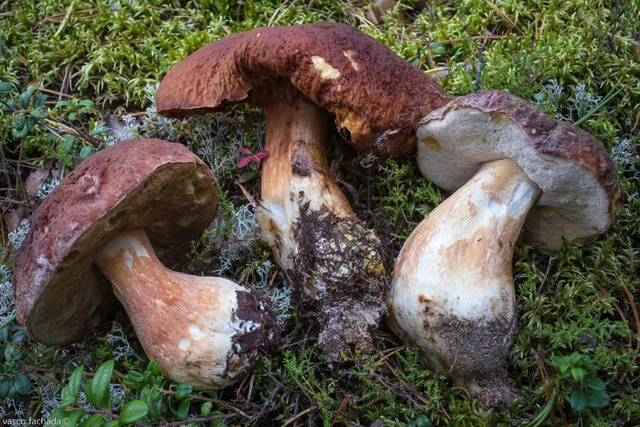
CHOICE EDIBLE: Pine Bolete is considered by many to be the best tasting of all boletes, with rich, nutty flavor and firm texture. Highly prized for drying, as flavor intensifies. The reddish-brown coloration and pine association are key identification features. Always cook thoroughly.
Description
The Pine Bolete features a dark reddish-brown to mahogany cap (7-30 cm) with smooth to slightly sticky surface when wet. Pores are white when young, aging to yellow-olive, with no bruising. The robust stem is reddish-brown with white to pinkish reticulation, often with vinaceous (wine-red) tones. White flesh may show slight pinkish tinge under cap cuticle but does not stain when cut. Spore print is olive-brown.
Habitat & Distribution
Habitat: Mycorrhizal with pine, spruce, and other conifers in montane and subalpine coniferous forests. Prefers acidic soils and higher elevations. Often fruits in large numbers under mature conifers.
Region: Rocky Mountains, Pacific Northwest mountains, Cascade Range, Sierra Nevada, Northern California highlands, British Columbia, Alaska
Seasonality
Late summer through fall (July-October), with peak fruiting in August-September at higher elevations. Appears after sustained rainfall during warm weather.
Typical months: Jul-Oct
Common Lookalikes
Always verify identification to avoid these similar species:
- Boletus edulis - lighter cap color, less reddish tones
- Boletus aereus - darker cap, prefers oak not pine
- Tylopilus felleus - pink pores, bitter taste
- Other reddish Boletus species - all edible
Related Species
Browse all species in the Mushroom Database →
Track Your Pine Bolete Finds
Pin the patch before you leave it. Coordinates, photos, and field notes stay AES-encrypted on your device — and the offline lookalike guide travels with you into the deep woods.
Download Mushroom TrackerDisclaimer: This guide is for educational purposes only. Never consume a wild mushroom unless you are 100% certain of its identification.