✅ Edibility Note
EDIBLE: Bluing Bolete is a good edible mushroom with firm texture and mild flavor. The blue-staining reaction is normal and safe - this is NOT an indication of toxicity. Cook thoroughly before eating. The bluing helps distinguish it from non-bluing species like B. edulis.
Description
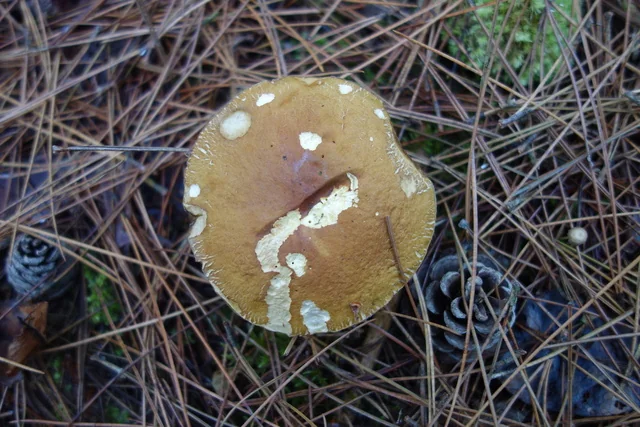
The Bluing Bolete displays a brown to reddish-brown cap (5-15 cm) with smooth surface. Pores are yellow to olive-yellow, slowly bruising blue-green when handled - a diagnostic feature. The yellowish stem shows reticulation and also bruises blue. White to pale yellow flesh stains blue when cut, especially near pore surface. This bluing reaction distinguishes it from similar species. Spore print is olive-brown.
Habitat & Distribution
Habitat: Mycorrhizal with oak and other hardwoods in deciduous and mixed forests. Prefers rich, well-drained soils in mature forests. Common in oak-dominated habitats.
Region: Eastern United States, Southeastern states, Mid-Atlantic region, Appalachian Mountains, Great Lakes region, Oak forests throughout eastern North America
Seasonality
Summer through fall (July-October) with peak fruiting in late summer. Appears after warm rains during humid weather.
Typical months: Jul-Oct
Common Lookalikes
Always verify identification to avoid these similar species:
- Boletus edulis - white pores, no bluing reaction
- Boletus variipes - more dramatic bluing, different range
- Tylopilus felleus - pink pores, bitter, no blue
- Boletus sensibilis - bruises blue very strongly
Related Species
Browse all species in the Mushroom Database →
Track Your Almost Bluing King Bolete Finds
Pin the patch before you leave it. Coordinates, photos, and field notes stay AES-encrypted on your device — and the offline lookalike guide travels with you into the deep woods.
Download Mushroom TrackerDisclaimer: This guide is for educational purposes only. Never consume a wild mushroom unless you are 100% certain of its identification.