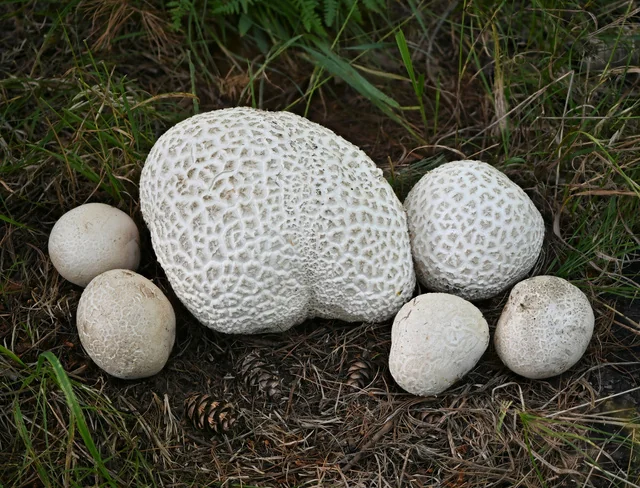
✅ Edibility Note
EDIBLE when pure white inside: CRITICAL - ALWAYS cut specimen completely in half from top to bottom before consuming. Edible ONLY if interior is completely pure white and firm throughout. If any yellow, brown, purple, or developing structures visible inside, DO NOT EAT. This prevents consuming toxic lookalikes and immature deadly Amanitas. The distinctive scaled surface helps identification, but internal white color is the definitive edibility test. Cook thoroughly.
Description
Large round to oval puffballs 4-12 inches diameter with distinctive thick, polygonal plates or scales on white to tan surface, giving areolate (cracked tile) appearance. Interior pure white when edible, turning olive-yellow then brown. Has small basal attachment but no distinct sterile base. Unique scaled surface pattern.
Habitat & Distribution
Habitat: Saprobic in mountainous coniferous and mixed forests, particularly under ponderosa pine, Douglas-fir, and in montane meadows. Prefers well-drained soils at higher elevations. Common in mountain parks, open woods, and forest edges in western mountains.
Region: Rocky Mountains, Sierra Nevada, Cascade Range, Southwestern mountains, Western montane forests, British Columbia south to Arizona
Seasonality
Late summer through fall, typically August-October. Peak fruiting after monsoon rains in Southwest. Most abundant September-October in mountain regions.
Typical months: Aug-Oct
Common Lookalikes
Always verify identification to avoid these similar species:
- Calvatia sculpta (similar scales but different pattern)
- DEADLY: Immature Amanita buttons (ALWAYS CUT OPEN - will show developing gills/cap inside)
- Scleroderma species/Earthballs (toxic, purple-black interior, much thicker rind)
- Other Calvatia species (different surface patterns)
Related Species
Browse all species in the Mushroom Database →
Track Your Western Giant Puffball Finds
Pin the patch before you leave it. Coordinates, photos, and field notes stay AES-encrypted on your device — and the offline lookalike guide travels with you into the deep woods.
Download Mushroom TrackerDisclaimer: This guide is for educational purposes only. Never consume a wild mushroom unless you are 100% certain of its identification.