✅ Edibility Note
CHOICE EDIBLE: Highly prized as one of the finest edible mushrooms with excellent flavor, meaty texture, and medicinal properties. Widely cultivated in Asia as 'Maitake.' Harvest while fresh and before insect damage. Best when young with white to pale gray colors. Cook thoroughly. The complex rosette form and oak association make identification straightforward. Very safe when properly identified. One of the most sought-after wild mushrooms.
Description
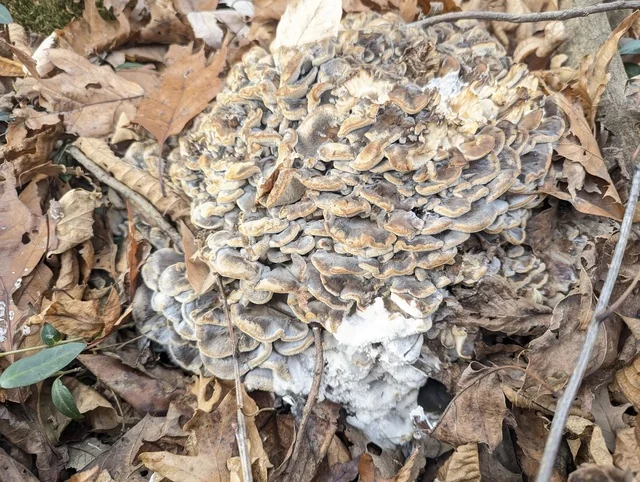
Distinctive large compound fruiting body 10-36+ inches wide composed of dozens of overlapping gray-brown spoon-shaped caps arising from a central branching white base. Individual caps 1-3 inches wide with wavy edges. White pore surface underneath. Grows in dense rosettes resembling a hen's feathers. Can weigh 10-50+ pounds. Unmistakable when mature.
Habitat & Distribution
Habitat: Parasitic at bases of living and dead hardwood trees, particularly oak, elm, maple, and beech. Causes white rot of heartwood and roots. Forms large rosettes at tree bases, often appearing from the same location annually. Common in mature hardwood forests. Grows from underground sclerotia.
Region: Eastern North America, Great Lakes region, Northeastern forests, Appalachian Mountains, Midwest hardwood forests, Asia and Europe
Seasonality
Late summer through fall, typically August-November. Peak fruiting in September-October. Most common in early fall. Can flush in same location for many years. Fruits after late summer rains.
Typical months: Aug-Nov
Common Lookalikes
Always verify identification to avoid these similar species:
- Meripilus sumstinei (darker, blackens when handled, different texture)
- Bondarzewia berkeleyi (lighter colored, larger individual caps)
- Berkeley's polypore complex (less organized rosette form)
- Umbrella polypore (Polyporus) - different structure, not clustered
Related Species
Browse all species in the Mushroom Database →
Track Your Hen of the Woods Finds
Pin the patch before you leave it. Coordinates, photos, and field notes stay AES-encrypted on your device — and the offline lookalike guide travels with you into the deep woods.
Download Mushroom TrackerDisclaimer: This guide is for educational purposes only. Never consume a wild mushroom unless you are 100% certain of its identification.