✅ Edibility Note
CHOICE EDIBLE: Sweet and mild flavor when cooked, though may be slightly peppery when raw. Collect young specimens for best texture - older specimens can become tough or develop bitter taste. The distinctive spines/teeth on the underside make misidentification with toxic species unlikely. Clean thoroughly as spines trap debris. May cause mild digestive upset in sensitive individuals if consumed in large quantities.
Description
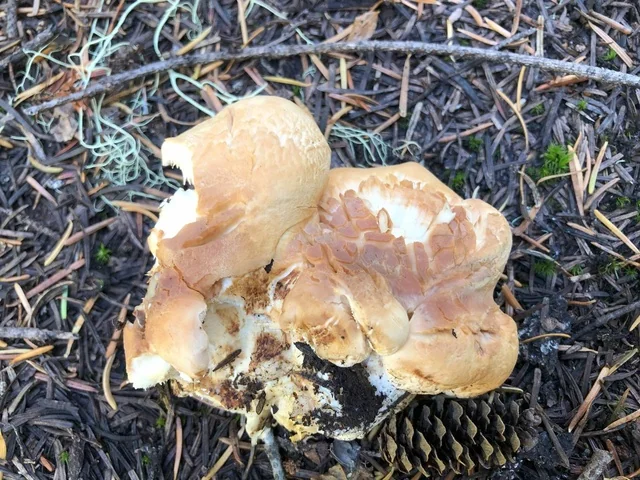
Sweet Tooth has an irregularly shaped cream to pale orange cap (3-15 cm) with a wavy, lobed margin. The distinctive feature is the underside covered with brittle, downward-pointing SPINES or TEETH instead of gills or pores - these spines are cream to pale orange, easily detached when rubbed. The stem is off-center to central, thick, white to pale orange, smooth, and often curved. The flesh is white, thick, brittle, with a mild taste and pleasant odor. Spore print is white. This easily identified edible has a slightly peppery taste when raw that disappears with cooking.
Habitat & Distribution
Habitat: Mycorrhizal with both hardwoods and conifers. Found on the ground in mixed forests, under oak, beech, pine, and spruce. Often grows scattered or in small groups. Prefers well-drained soil, commonly found in moss or leaf litter.
Region: Pacific Northwest, Northeast, Midwest, Southeast, Rocky Mountains, Europe
Seasonality
Summer through fall (July-November), with peak fruiting in fall. In milder climates may fruit into early winter.
Typical months: Jul-Nov
Common Lookalikes
Always verify identification to avoid these similar species:
- Hydnum umbilicatum (Depressed Hedgehog) - smaller, more orange, depressed center
- Hydnum albidum (White Hedgehog) - pure white color
- Hydnum rufescens (Terracotta Hedgehog) - darker orange-brown color
- Sarcodon species - larger, darker, often bitter taste
Related Species
Browse all species in the Mushroom Database →
Track Your Sweet Tooth Finds
Pin the patch before you leave it. Coordinates, photos, and field notes stay AES-encrypted on your device — and the offline lookalike guide travels with you into the deep woods.
Download Mushroom TrackerDisclaimer: This guide is for educational purposes only. Never consume a wild mushroom unless you are 100% certain of its identification.