✅ Edibility Note
EDIBLE: Good edible mushroom with firm texture and mild flavor when young. Cook thoroughly before eating. Older specimens can become tough and are best avoided. The central stem and high growth position on trees help distinguish it from Pleurotus species. Related to cultivated Hon-shimeji (H. tessulatus) grown commercially.
Description
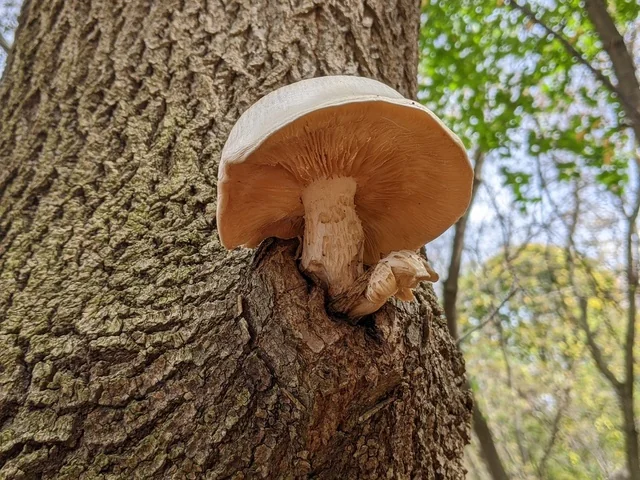
White to cream-colored caps 2-6 inches wide with smooth to slightly hairy surface. Unlike true oyster mushrooms, has a more central to slightly off-center stem 2-4 inches long. White decurrent gills. Often grows in small clusters high on living or recently dead hardwood trees. White spore print.
Habitat & Distribution
Habitat: Saprobic and parasitic on living and dead hardwood trees, particularly elm, box elder, maple, and aspen. Typically fruits high up on tree trunks, often 10-40 feet above ground. Common on standing trees in urban and forest settings. Causes white rot of heartwood.
Region: Eastern North America, Great Lakes region, Upper Midwest, Pacific Northwest, Northern temperate forests
Seasonality
Fall, primarily September-November. Can appear in late summer in northern regions. Fruits during cool autumn weather after rain. Most common in October.
Typical months: Sep-Nov
Common Lookalikes
Always verify identification to avoid these similar species:
- Pleurotus ostreatus (lateral/absent stem, more oyster-shaped)
- Pleurotus populinus (no central stem, on aspen/cottonwood)
- Angel wings (Pleurocybella porrigens) - toxic, pure white, on conifers
- Armillaria species (has ring on stem, yellowish colors)
Related Species
Browse all species in the Mushroom Database →
Track Your Elm Oyster Finds
Pin the patch before you leave it. Coordinates, photos, and field notes stay AES-encrypted on your device — and the offline lookalike guide travels with you into the deep woods.
Download Mushroom TrackerDisclaimer: This guide is for educational purposes only. Never consume a wild mushroom unless you are 100% certain of its identification.