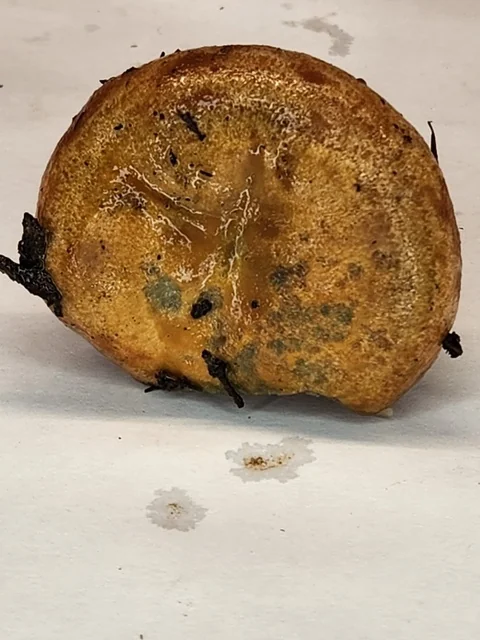
✅ Edibility Note
CHOICE EDIBLE: Highly prized for its mild flavor. The distinctive DARK RED LATEX is diagnostic. Stains purple when cooked - this is normal. Best when young and firm. Cook thoroughly.
Description
Bleeding Milk Cap has an orange to orange-brown cap (5-15 cm) with darker concentric zones. Gills are pale orange, crowded, decurrent. Stem is orange with scrobiculations. KEY FEATURE: DARK RED to WINE-RED LATEX (milk) that exudes when cut - distinctive blood-red color. Latex slowly stains tissues reddish-purple. Flesh is pale. Spore print is pale cream to pinkish.
Habitat & Distribution
Habitat: Mycorrhizal with CONIFERS, especially fir, spruce, and hemlock in western North America. Grows on ground in coniferous forests, mountain forests. Prefers well-drained soil.
Region: Pacific Northwest, Rocky Mountains, Northern California, British Columbia
Seasonality
Fall (September-November), fruiting after rains in mountains.
Typical months: Sep-Nov
Common Lookalikes
Always verify identification to avoid these similar species:
- Lactarius deliciosus - orange latex not red
- Lactarius sanguifluus - similar red latex, different host
- Other orange Lactarius - check latex color
Related Species
Browse all species in the Mushroom Database →
Track Your Bleeding Milk Cap Finds
Pin the patch before you leave it. Coordinates, photos, and field notes stay AES-encrypted on your device — and the offline lookalike guide travels with you into the deep woods.
Download Mushroom TrackerDisclaimer: This guide is for educational purposes only. Never consume a wild mushroom unless you are 100% certain of its identification.