✅ Edibility Note
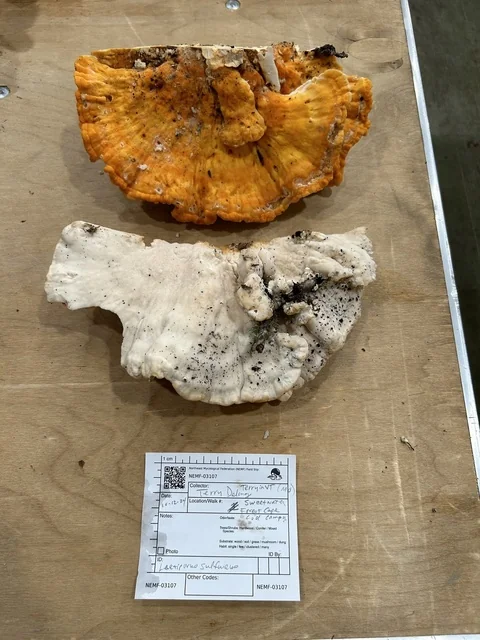
CHOICE EDIBLE when young and tender: Generally causes fewer digestive issues than L. sulphureus for sensitive individuals. Harvest only young, soft, pliable specimens with moist texture. Avoid old, tough, dry specimens. Cook thoroughly. The white pore surface and ground-based growth help identify this milder species. Considered one of the safest Laetiporus for beginners. Excellent texture and flavor.
Description
Orange to salmon-pink bracket with WHITE to pale cream pore surface (not yellow), forming rosettes of overlapping shelves 2-10 inches wide. Similar appearance to L. sulphureus but distinguished by white pores and ground-based fruiting. Soft and succulent when young. Multiple shelves emanate from central rooting attachment to buried wood or tree roots. Annual bracket.
Habitat & Distribution
Habitat: Saprobic on buried wood and roots of dead hardwood trees, particularly oak. Appears to grow from ground at tree bases or from buried roots and stumps. Forms large multi-tiered rosettes near or surrounding oak trees. Eastern hardwood forests. Causes white rot of buried wood.
Region: Eastern North America, Midwest, Great Lakes region, Southeastern United States, Appalachian region, East of Great Plains
Seasonality
Late spring through fall, typically May-September. Peak fruiting in June-August. Similar timing to L. sulphureus but often appears slightly later in season. Flushes after warm rains.
Typical months: May-Sep
Common Lookalikes
Always verify identification to avoid these similar species:
- Laetiporus sulphureus (yellow pores, grows on trunk/logs)
- Other Laetiporus species (yellow pores)
- Meripilus sumstinei (darker brown, black staining, different texture)
- Bondarzewia berkeleyi (cream-brown, different texture/pores)
Related Species
Browse all species in the Mushroom Database →
Track Your White-pored Chicken of the Woods Finds
Pin the patch before you leave it. Coordinates, photos, and field notes stay AES-encrypted on your device — and the offline lookalike guide travels with you into the deep woods.
Download Mushroom TrackerDisclaimer: This guide is for educational purposes only. Never consume a wild mushroom unless you are 100% certain of its identification.