✅ Edibility Note
EDIBLE: Manzanita Bolete is a good edible with firm texture. Must be cooked thoroughly for at least 15-20 minutes. The unique manzanita association and winter fruiting period distinguish it from other boletes. Flesh darkening is normal and safe.
Description
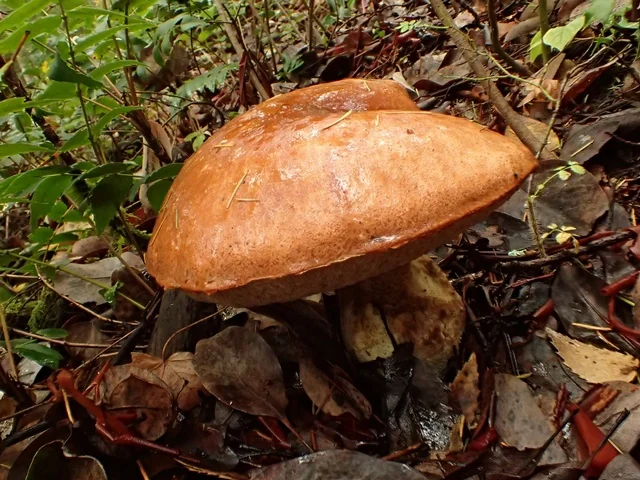
The Manzanita Bolete features a reddish-brown to dark brown cap (5-15 cm) with dry, velvety to smooth surface. Pores are white when young, aging to olive-gray, bruising brownish. The whitish to pale brown stem is covered with brown to dark brown scabers (rough scales). White flesh stains pinkish-brown when cut, eventually darkening to gray. Spore print is olive-brown.
Habitat & Distribution
Habitat: Mycorrhizal exclusively with manzanita (Arctostaphylos species) in chaparral and mixed oak-madrone forests. Forms obligate associations with manzanita shrubs. Found in coastal forests and foothill woodlands with manzanita understory.
Region: California Coast Ranges, Northern California, Central California, San Francisco Bay Area, Sierra Nevada foothills, Southern Oregon
Seasonality
Winter through spring (December-April) with peak fruiting in January-March. Unusual winter fruiting period associated with California rainy season.
Typical months: Dec-Apr
Common Lookalikes
Always verify identification to avoid these similar species:
- Other Leccinum species - but different tree associations
- Boletus species - lack the scabrous stem
- Leccinum aurantiacum - more orange cap, different habitat
- Suillus species - viscid cap, conifer association
Related Species
Browse all species in the Mushroom Database →
Track Your Manzanita Bolete Finds
Pin the patch before you leave it. Coordinates, photos, and field notes stay AES-encrypted on your device — and the offline lookalike guide travels with you into the deep woods.
Download Mushroom TrackerDisclaimer: This guide is for educational purposes only. Never consume a wild mushroom unless you are 100% certain of its identification.