✅ Edibility Note
EDIBLE: Birch Bolete is a good edible with mild flavor and somewhat soft texture when mature. Must be cooked thoroughly - never eat raw. Best when young and firm. The obligate birch association and scabrous stem are diagnostic. Some people may experience mild digestive upset.
Description
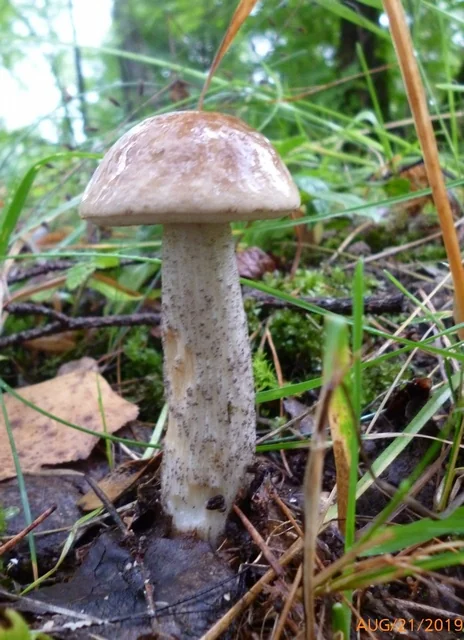
The Birch Bolete displays a gray-brown to tan-brown cap (4-15 cm) with smooth to slightly wrinkled surface, sometimes becoming cracked with age. Pores are white when young, becoming dingy gray-brown, bruising slightly brownish. The whitish stem is covered with black to dark brown scabers (rough scales). White flesh does not change color or may show slight pinkish tinge when cut. Spore print is olive-brown.
Habitat & Distribution
Habitat: Mycorrhizal exclusively with birch trees (Betula species) in mixed northern forests. Forms obligate associations with birches. Found in birch groves, mixed birch-conifer forests, and riparian areas with paper birch.
Region: Northern United States, Alaska, Canada, Great Lakes region, Northeastern forests, Pacific Northwest birch stands, Rocky Mountain birch zones
Seasonality
Summer through fall (June-October) with peak fruiting in July-September. Common in late summer in northern birch forests.
Typical months: Jun-Oct
Common Lookalikes
Always verify identification to avoid these similar species:
- Other Leccinum species - different cap colors and tree associations
- Boletus species - lack the characteristic scabrous stem
- Leccinum holopus - paler colors, also with birch
- Tylopilus species - some have scabers but different pore colors
Related Species
Browse all species in the Mushroom Database →
Track Your Birch Bolete Finds
Pin the patch before you leave it. Coordinates, photos, and field notes stay AES-encrypted on your device — and the offline lookalike guide travels with you into the deep woods.
Download Mushroom TrackerDisclaimer: This guide is for educational purposes only. Never consume a wild mushroom unless you are 100% certain of its identification.