✅ Edibility Note
EDIBLE with caution: Considered edible but less desirable than L. nuda. Must be thoroughly cooked - NEVER eat raw. The pale colors and dingy appearance make it less appealing and harder to identify confidently. Some people report digestive upset. Try small amounts first. Verify PINK SPORE PRINT. The subtle purple tones, grassland habitat, and sweet odor are diagnostic but not distinctive. Not recommended for beginners due to pale colors and confusion risks. Cook thoroughly if attempting. The "sordid" dingy appearance is accurate. Better blewits exist.
Description
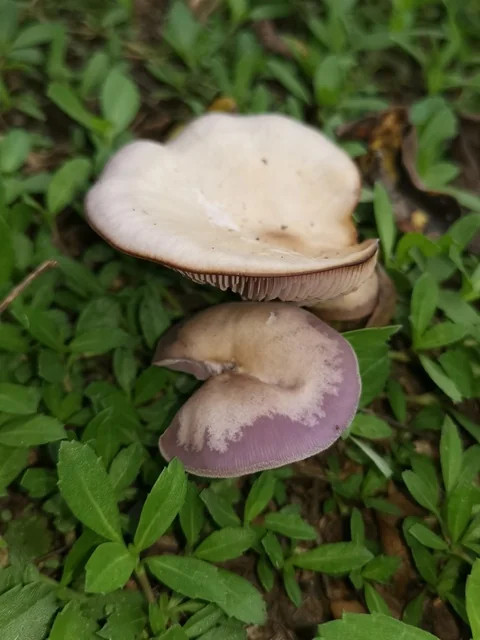
The Sordid Blewit is a smaller paler cousin of the Wood Blewit. Cap 3-8 cm across, convex becoming flat or slightly depressed, pale lilac-gray to brownish-lilac or buff-tan. The purple coloration is subtle and fades quickly to dingy tan-brown (hence "sordid"). The surface is smooth, dry to slightly greasy. The gills are adnate to slightly decurrent, pale lilac becoming tan-buff. The stem is 3-7 cm tall, slender, pale lilac to buff with a slightly enlarged base. The flesh is thin, pale, with a sweet slightly fruity odor (less pronounced than L. nuda).
Habitat & Distribution
Habitat: Found in grasslands, pastures, lawns, meadows, grassy woodland edges, and parks. Grows as a grass and humus decomposer in nitrogen-rich soil. Fruits scattered to gregarious, often in fairy rings or troops in grass. Prefers open grassy areas rather than forests.
Region: Europe (common), North America (less common), Temperate grasslands worldwide, Parks and pastures, Cosmopolitan in suitable habitats
Seasonality
Late summer through fall (August-November) in temperate regions. Can fruit into early winter in mild climates. Peak fruiting in September-October.
Typical months: Aug-Nov
Common Lookalikes
Always verify identification to avoid these similar species:
- Lepista nuda (edible) - darker purple, larger, woodland habitat
- Clitocybe species - some toxic, pale colors, different odors
- Entoloma species (some toxic) - pink spores but angular, flesh fragile
- Laccaria laccata (edible) - smaller, more hygrophanous, woodland
Related Species
Browse all species in the Mushroom Database →
Track Your Sordid Blewit Finds
Pin the patch before you leave it. Coordinates, photos, and field notes stay AES-encrypted on your device — and the offline lookalike guide travels with you into the deep woods.
Download Mushroom TrackerDisclaimer: This guide is for educational purposes only. Never consume a wild mushroom unless you are 100% certain of its identification.