✅ Edibility Note
EDIBLE but not choice: Considered edible and safe to eat but has little flavor and unusual texture. The gelatinous yet toothed structure makes it more novelty than food. Can be cooked in soups or sautéed. No toxic lookalikes exist. The combination of translucent gelatinous cap and white teeth is absolutely distinctive - no other mushroom shares this combination. Safe to try but most foragers pass it by. More interesting from a mycological perspective than culinary. The jelly-like texture and spines are unmistakable.
Description
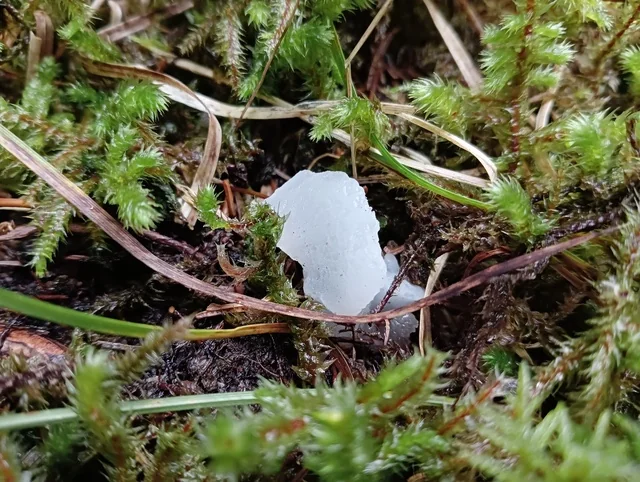
The Jelly Tooth is a unique mushroom combining features of toothed fungi and jelly fungi. Cap 2-8 cm across, spatula or fan-shaped, translucent gray-white to pale brown with a gelatinous texture. The upper surface is smooth and jelly-like. The underside bears soft white spines/teeth (0.5-3 mm long) instead of gills or pores. The stem is lateral (off-center) or absent, 1-4 cm when present. Texture is rubbery-gelatinous, firm but translucent, reviving when moistened after drying.
Habitat & Distribution
Habitat: Found on well-rotted conifer logs and stumps, particularly hemlock, spruce, fir, and pine. Grows on very decayed wood in advanced stages of decomposition. Common in mountain conifer forests. Fruits scattered to gregarious, often in overlapping groups on logs. Prefers cool moist forests with abundant woody debris.
Region: Pacific Northwest (very common), Northern California mountains, Rocky Mountains, Northeastern North America, Europe (widespread), Northern temperate conifer forests worldwide
Seasonality
Late summer through fall (August-November) in mountain regions. In the Pacific Northwest and coastal areas, may fruit into winter (December-January). Peak fruiting occurs in fall during cool wet weather. Requires consistent moisture and cool temperatures.
Typical months: Aug-Jan
Common Lookalikes
Always verify identification to avoid these similar species:
- Phlebia tremellosa (inedible) - jelly-like but lacks teeth, has wrinkles/folds
- Hericium species (edible) - white teeth but firm flesh, not gelatinous
- Tremella species (edible) - brain-like, no teeth
- No toxic lookalikes
Related Species
Browse all species in the Mushroom Database →
Track Your Toothed Jelly Fungus Finds
Pin the patch before you leave it. Coordinates, photos, and field notes stay AES-encrypted on your device — and the offline lookalike guide travels with you into the deep woods.
Download Mushroom TrackerDisclaimer: This guide is for educational purposes only. Never consume a wild mushroom unless you are 100% certain of its identification.