✅ Edibility Note
EDIBLE: Considered edible and good when young and firm. One of the better coral fungi for eating. Cook thoroughly. The flavor is mild and pleasant. Only collect young fresh specimens - older specimens become tough and bitter. Discard any that are waterlogged or have insect damage. Some people report mild digestive upset from coral fungi. CRITICAL: Distinguish from toxic R. formosa which has more salmon-pink coloring and yellows when bruised. Also avoid bitter-tasting coral fungi. The golden-yellow color without pink tones is key. Try small amounts first.
Description
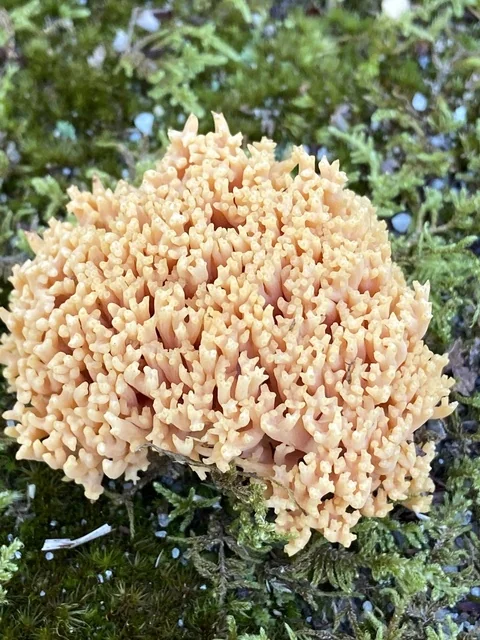
Golden Coral is a beautiful upright coral fungus 8-20 cm tall and 8-15 cm wide. The fruitbody consists of numerous upright branches emerging from a thick white to pale yellow base. Young branches are bright golden-yellow to orange-yellow, becoming ochre-brown with age. The branch tips are typically blunt and rounded. The branching is dense and compact, creating a cauliflower-like appearance. The flesh is white to pale yellow, brittle, with a mild pleasant odor. The entire mushroom has a fleshy not gelatinous texture.
Habitat & Distribution
Habitat: Found in hardwood and mixed forests, particularly under oak, beech, and other deciduous trees. Forms mycorrhizal associations with tree roots. Grows terrestrially from soil, typically scattered or in small groups. Prefers rich humus soil in mature forests. Common in leaf litter and near rotting wood.
Region: Europe (widespread), Eastern North America (common), Pacific Northwest (occasional), California (rare), Temperate hardwood forests worldwide, Particularly common in the Southeast
Seasonality
Late summer through fall (August-November) in most regions. Peak fruiting occurs in early to mid-fall. In warmer climates, may fruit as late as December. Requires warm soil temperatures followed by fall rains.
Typical months: Aug-Nov
Common Lookalikes
Always verify identification to avoid these similar species:
- Ramaria botrytis (edible) - pink/wine-red branch tips, similar size
- Ramaria formosa (toxic) - salmon-pink to orange branches, yellows when bruised
- Ramaria rasilispora (edible) - very similar, microscopy needed to distinguish
- Clavariadelphus species (edible) - simpler club shape, not intricately branched
Related Species
Browse all species in the Mushroom Database →
Track Your Golden Coral Finds
Pin the patch before you leave it. Coordinates, photos, and field notes stay AES-encrypted on your device — and the offline lookalike guide travels with you into the deep woods.
Download Mushroom TrackerDisclaimer: This guide is for educational purposes only. Never consume a wild mushroom unless you are 100% certain of its identification.