✅ Edibility Note
EDIBLE: Larch Bolete is a good edible with firm texture and mild flavor. Remove the very slimy cap cuticle before cooking. The obligate larch association makes identification straightforward - if no larch trees present, it's not this species. Some people experience digestive upset. Cook thoroughly.
Description
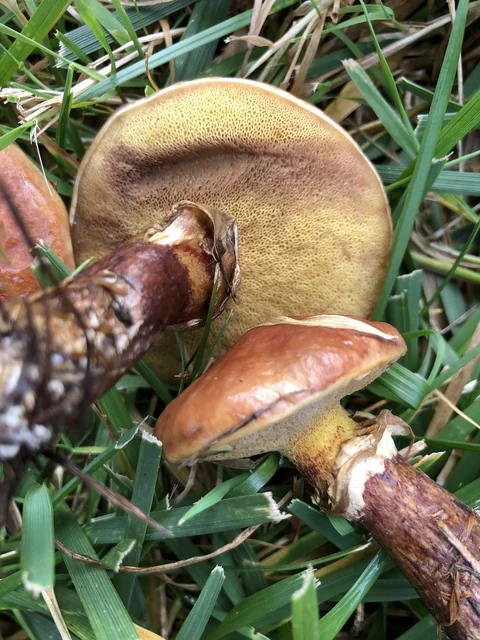
The Larch Bolete displays a distinctive bright golden-yellow to orange-yellow cap (3-10 cm) with very slimy, glutinous surface when wet. Pores are bright yellow, bruising brownish. A prominent membranous ring on the yellow stem often becomes stained brown with spores. Yellow flesh does not stain. The bright yellow colors and larch association are diagnostic. Spore print is cinnamon-brown.
Habitat & Distribution
Habitat: Mycorrhizal exclusively with larch (Larix species) - cannot fruit without larch trees. Forms obligate associations with European larch, Western larch, and tamarack. Found in larch plantations and native larch forests.
Region: Pacific Northwest (Western larch), Rocky Mountains, Northeastern forests (tamarack), Great Lakes region, Larch plantations throughout North America, Canada, Alaska
Seasonality
Late summer through fall (August-November) with peak fruiting in September-October. Fruits synchronously with larch in temperate regions.
Typical months: Aug-Nov
Common Lookalikes
Always verify identification to avoid these similar species:
- Suillus luteus - darker cap, with pine not larch
- Other Suillus species - none as bright yellow
- Boletus species - not viscid, different habitat
- No toxic lookalikes when found with larch
Related Species
Browse all species in the Mushroom Database →
Track Your Larch Bolete Finds
Pin the patch before you leave it. Coordinates, photos, and field notes stay AES-encrypted on your device — and the offline lookalike guide travels with you into the deep woods.
Download Mushroom TrackerDisclaimer: This guide is for educational purposes only. Never consume a wild mushroom unless you are 100% certain of its identification.