✅ Edibility Note
EDIBLE: Pungent Slippery Jack is edible with firm texture but distinctive aromatic odor that may be off-putting to some. Remove the slimy cap cuticle before cooking. The Douglas fir association and occasional pungent smell are distinctive. Some people experience digestive upset. Always cook thoroughly.
Description
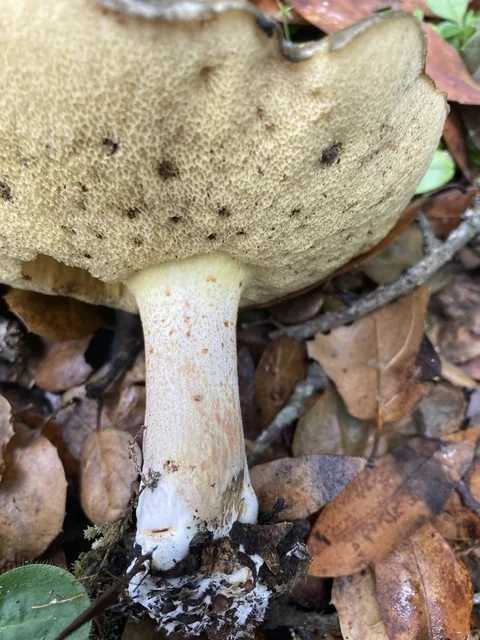
The Pungent Slippery Jack features a brown to cinnamon-brown cap (5-12 cm) with very slimy, glutinous surface when wet. Pores are yellow to olive-yellow with angular shape. The yellow to brownish stem has brownish to reddish glandular dots and lacks a ring. Yellow flesh may stain pinkish-brown. Often has a distinctive aromatic or turpentine-like odor - hence the name. Spore print is cinnamon-brown.
Habitat & Distribution
Habitat: Mycorrhizal exclusively with Douglas fir in Pacific Northwest forests. Forms obligate associations with Douglas fir. Found in pure Douglas fir stands and mixed conifer forests where Douglas fir is dominant.
Region: Pacific Northwest, Oregon, Washington, Northern California, British Columbia, Vancouver Island, Coastal Douglas fir forests
Seasonality
Fall (September-November) with peak fruiting in October. Appears after autumn rains in Douglas fir habitats.
Typical months: Sep-Nov
Common Lookalikes
Always verify identification to avoid these similar species:
- Suillus lakei - brighter orange colors, also with Douglas fir
- Other Suillus species - different tree associations
- Boletus species - not viscid, different appearance
- Leccinum species - have scabrous stems not glandular dots
Related Species
Browse all species in the Mushroom Database →
Track Your Pungent Slippery Jack Finds
Pin the patch before you leave it. Coordinates, photos, and field notes stay AES-encrypted on your device — and the offline lookalike guide travels with you into the deep woods.
Download Mushroom TrackerDisclaimer: This guide is for educational purposes only. Never consume a wild mushroom unless you are 100% certain of its identification.