✅ Edibility Note
INEDIBLE: Tylopilus felleus, commonly called the Bitter Bolete, is intensely bitter - so bitter that a single specimen can ruin an entire meal of mushrooms. The bitterness persists and even intensifies during cooking. While not toxic, it is completely unpalatable and inedible. Often mistaken for prized edible boletes like porcini; check for pink pore surface and reticulated stem pattern to distinguish.
Description
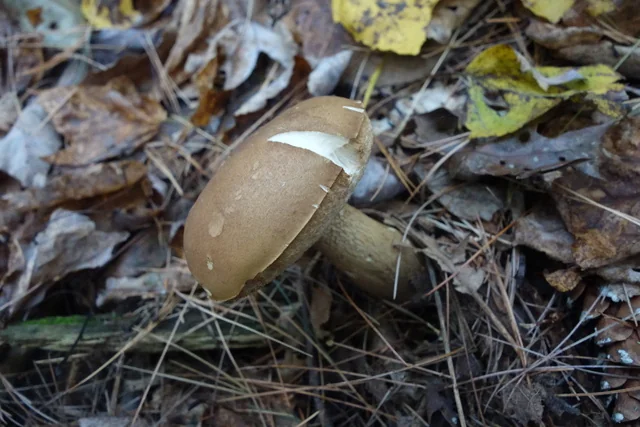
The Bitter Bolete resembles King Bolete but has distinctive pink pores. Features a brown to tan cap (5-15 cm) with dry surface. Pores are white when very young, quickly becoming pinkish to flesh-colored - a key diagnostic feature. The thick stem has brown reticulation (net-like pattern). White flesh does not bruise but tastes INTENSELY BITTER. Spore print is pinkish-brown.
Habitat & Distribution
Habitat: Mycorrhizal with both conifers and hardwoods in mixed forests. Found with pine, spruce, oak, and beech. Prefers acidic soils and well-drained areas. Common in mature mixed forests.
Region: Eastern North America, Northeastern forests, Great Lakes region, Appalachian Mountains, Southeastern states, Pacific Northwest, Widespread across North America
Seasonality
Summer through fall (July-October) with peak fruiting in August-September. Fruits during warm, humid weather after rainfall.
Typical months: Jul-Oct
Common Lookalikes
Always verify identification to avoid these similar species:
- Boletus edulis (King Bolete) - white to yellow pores, NOT pink, not bitter
- Boletus subcaerulescens - yellow pores that bruise blue
- Other Boletus species - check pore color carefully
- If pores are pink and taste is bitter, it's Bitter Bolete
Related Species
Browse all species in the Mushroom Database →
Track Your Bitter Bolete Finds
Pin the patch before you leave it. Coordinates, photos, and field notes stay AES-encrypted on your device — and the offline lookalike guide travels with you into the deep woods.
Download Mushroom TrackerDisclaimer: This guide is for educational purposes only. Never consume a wild mushroom unless you are 100% certain of its identification.