✅ Edibility Note
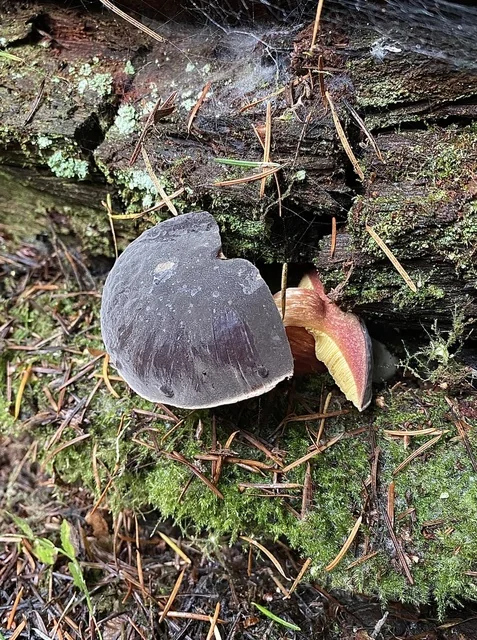
EDIBLE: Zeller's Bolete is a good edible with firm texture and mild flavor. The dramatic blue-staining reaction is completely normal and safe. Cook thoroughly before eating. The dark velvety cap, bright yellow pores, and strong bluing distinguish this species. Some people may experience mild digestive upset.
Description
Zeller's Bolete features a distinctive dark brown to blackish cap (4-12 cm) with velvety, dry surface that often cracks with age. Pores are bright yellow when young, bruising blue-green when handled. The yellow stem has no reticulation but may show reddish-brown stains at base. Yellow flesh instantly stains deep blue when cut - a dramatic reaction. Spore print is olive-brown.
Habitat & Distribution
Habitat: Mycorrhizal with tanoak, madrone, and Douglas fir in Pacific Coast forests. Prefers mixed hardwood-conifer forests with tanoak or madrone. Found in coastal forests and oak woodlands with evergreen hardwoods.
Region: Pacific Northwest, Northern California, Oregon Coast Range, California Coast Ranges, Southern Oregon, Tanoak and madrone forests
Seasonality
Fall through winter (October-February) with peak fruiting in November-December. Late-season fruiting after autumn and winter rains along the coast.
Typical months: Oct-Feb
Common Lookalikes
Always verify identification to avoid these similar species:
- Boletus species - most lack the dramatic bluing reaction
- Other Xerocomellus species - different colors or distributions
- Suillus species - viscid caps, different habitat
- The dark velvety cap and strong blue staining are distinctive
Related Species
Browse all species in the Mushroom Database →
Track Your Zeller's Bolete Finds
Pin the patch before you leave it. Coordinates, photos, and field notes stay AES-encrypted on your device — and the offline lookalike guide travels with you into the deep woods.
Download Mushroom TrackerDisclaimer: This guide is for educational purposes only. Never consume a wild mushroom unless you are 100% certain of its identification.